

- Home
- Learn
- Gemstones & Minerals
- Kashmir Sapphires: The Legend of the Blue Treasure
Kashmir Sapphires: The Legend of the Blue Treasure
Why Kashmir sapphires outprice every other blue: the legendary Paddar mines, the science behind the velvety cornflower blue, and the records they set at auction.

Introduction
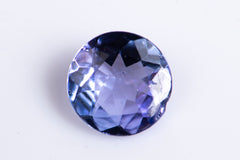
The name "Kashmir sapphire" carries an almost mythical weight in the world of gemstones. It stands as the ultimate benchmark for blue sapphires - the standard against which all others are judged. These stones are celebrated for their incomparable velvety cornflower-blue color, rich saturation, soft glow, and exceptional rarity.
Yet "Kashmir" itself refers to far more than a single remote mine. It is a vast, culturally rich, and geopolitically complex high-mountain region at the crossroads of India, Pakistan, and China, bordered by the towering Himalayas and Karakoram ranges. The entire disputed territory spans approximately 222,200 square kilometers (roughly 85,800 square miles). It is administered in parts by the three nations: Indian-administered Jammu and Kashmir along with Ladakh, Pakistan-administered Azad Kashmir and Gilgit-Baltistan, and Chinese-administered Aksai Chin.

When gem collectors and gemologists speak of "Kashmir sapphires," however, they refer exclusively to material from one legendary deposit: a remote, high-altitude site in the Paddar (Pádar) area of the Indian-administered Himalayas. Discovered in the late 19th century, these stones quickly earned global fame for their unique optical beauty. Fine sapphires from several other deposits can show attractive blue color and fine silk, but the specific combination of color depth, velvety softness, and historical prestige associated with old-mine Kashmir material remains exceptionally rare and highly valued.
The Historic Kashmir Sapphire Mines
The discovery of Kashmir sapphires occurred in 1881 in the Paddar region near Sumjam (Sumcham) in present-day Kishtwar district, Indian-administered Jammu and Kashmir. A landslide exposed a deposit of blue corundum crystals in metamorphic rocks, primarily gneisses and schists, within the Kudi Valley at an elevation of approximately 4,500-4,600 meters (14,800-15,100 feet).

Mining operations began in 1882 under the rule of the Maharaja Ranbir Singh of Kashmir. Due to the high altitude and harsh climatic conditions, extraction was limited to a short annual window, typically from July to September. The initial "Old Mine" produced material of exceptional quality during this early period. Within a few years, these sapphires gained international recognition for their distinctive velvety cornflower-blue color.
The most productive phase was relatively brief. The Old Mine was largely exhausted by 1887-1888. A nearby "New Mine," discovered around 1906, along with some associated placer deposits, was worked intermittently during the early 20th century, though the output was significantly lower in both quantity and quality. Official production declined sharply after this period. Sporadic mining attempts occurred in 1926-1927, but the mines were effectively closed by 1927. Subsequent activity has been minimal.

Attempts to revive the deposit have continued into the modern era. The Jammu and Kashmir authorities have periodically reopened exploration at Paddar but output remains small, highly variable in quality, and nothing comparable to the old-mine production has reached the market. For collectors, "Kashmir sapphire" therefore still refers overwhelmingly to stones mined in the late 19th and early 20th centuries.
Historical records indicate that only a few thousand carats of top-grade material were produced during the primary mining period. This limited output - far smaller than that of major Burmese or Sri Lankan sources of comparable quality - contributes to the rarity of authentic old-mine Kashmir sapphires today.
| Date | What happened at Paddar |
|---|---|
| 1881 | A landslide exposes blue corundum in metamorphic rock in the Kudi Valley, near Sumjam. |
| 1882 | Mining begins under Maharaja Ranbir Singh, limited to a short July-to-September season. |
| 1887-1888 | The "Old Mine," source of the finest material, is largely exhausted. |
| c. 1906 | A "New Mine" and associated placers are worked intermittently. Output is lower in quantity and quality. |
| 1926-1927 | Sporadic mining attempts. The mines are effectively closed by 1927. |
| Modern era | Periodic exploration at Paddar. Output remains small, variable, and not comparable to old-mine material. |
The Wider Kashmir Region and Its Minerals
While the term "Kashmir sapphire" refers exclusively to the historic stones from the Paddar/Kudi Valley mining area near Sumjam, the wider Kashmir region is geologically diverse and rich in minerals. Spanning high Himalayan and Karakoram terrains across areas administered by India, Pakistan, and China, the region features varied metamorphic and pegmatite formations that host a wide range of collectible gems and minerals.
Other areas of the Indian-administered highlands, including Zanskar and Ladakh, are associated with pegmatite and metamorphic minerals such as aquamarine, tourmaline, garnet, quartz, and feldspar. The geology here overlaps with the metamorphic conditions that produced the legendary Paddar sapphires, but no other locality has replicated their specific quality.
Pakistani-administered Kashmir (Gilgit-Baltistan and Azad Kashmir)
The Pakistan-administered side of the wider Kashmir region is also mineral-rich, especially when Gilgit-Baltistan is included in the broader geographic discussion. Gilgit-Baltistan, including areas such as Hunza, Nagar, Skardu, Shigar, and the Braldu region, is famous for pegmatite and metamorphic minerals. Fine aquamarine, topaz, tourmaline, apatite, quartz, feldspar, garnet, spinel, and pargasite are all known from this wider northern Pakistan mineral belt. Many of these specimens are highly valued by mineral collectors, especially aquamarine and associated pegmatite minerals from the Skardu-Shigar area.

Corundum also occurs here. The Neelum Valley area of Azad Jammu and Kashmir, especially the Nangimali ruby deposit, is known for ruby and sapphire. Gilgit-Baltistan (Hunza and Nagar) has also produced ruby and sapphire. These stones can be geologically interesting and, in some cases, attractive as gems or mineral specimens.
Stones from Pakistani localities are sometimes promoted with the word "Kashmir" because the name has strong commercial power. In most cases, however, the use of "Kashmir" is geographic or marketing language, not the classic gemological origin designation. A sapphire from Azad Kashmir, Hunza, Nagar, or other northern Pakistan localities does not gain the value of an old-mine Kashmir sapphire simply because it comes from a region connected to the wider Kashmir name. Unless a reputable laboratory supports origin from the historic Paddar source, the word "Kashmir" alone should not be treated as a value guarantee.
Chinese-administered Kashmir (primarily Aksai Chin in Xinjiang)
The Chinese-administered portion of the Kashmir region, mainly Aksai Chin, has limited documented gemstone production. Historical records note some ancient jade (nephrite) mining activity on the Xinjiang side of the area, though these operations were abandoned long ago. The region is not recognized as a significant source of sapphires or other high-value colored gemstones. China produces sapphires and other gems in other provinces (such as Heilongjiang), but not notably from its Kashmir territories.
Why Kashmir Sapphires Look Different
Kashmir sapphires are famous for their velvety cornflower-blue color: a rich, saturated blue with a soft, glowing appearance often described as "sleepy" or lit from within. This optical effect creates an exceptional balance of depth and softness that has made them the benchmark for blue sapphires.

What causes the velvety glow: silk, milky zones and Tyndall scattering
In older gem writing, the effect was usually attributed to rutile silk (fine needle-like inclusions of titanium dioxide) within the sapphire. Rutile silk can certainly be present in Kashmir sapphires, and it can contribute to the softening of light. Under magnification, fine silk, delicate clouds, and oriented internal features may all be part of the inclusion scene. But the classic Kashmir appearance is not best explained by rutile alone.
Modern gemological work gives a more precise explanation. The finest Kashmir sapphires often contain alternating transparent and slightly milky growth zones, dense patterned clouds, and extremely fine submicroscopic particles.
These tiny particles scatter light inside the stone and cause Tyndall scattering, a light-scattering effect closely related to the Rayleigh scattering that makes the sky appear blue. Very small particles scatter shorter (blue) wavelengths more efficiently than longer ones, diffusing light softly throughout the stone. The result is a rich saturation combined with a gentle, non-harsh glow. In the finest examples, this scattering enhances depth without making the gem look cloudy or dull.
Internal structure under magnification

The internal structure of classic Kashmir material can be quite distinctive. Gemologists often describe fine milky bands, blocky or step-like growth patterns, delicate clouds, and sometimes "snowflake" or ladder-like arrangements. These features can intersect along the crystallographic growth directions of corundum, giving the interior a soft, textured appearance under the microscope. In some stones, the zoning is subtle; in others, it is more visible, especially under diffused lighting.
Authentic old-mine Kashmir sapphires are almost exclusively unheated. Heat treatment is common in the sapphire trade and typically applied to improve clarity or color. In Kashmir material, however, high-temperature treatment can partially or extensively dissolve the fine silk and milky growth zones responsible for the velvety effect - the very feature that sets Kashmir sapphires apart. Because heating destroys the specific optical signature that makes these stones exceptional, rather than merely being "a treatment," its presence is viewed as a major negative factor in Kashmir-origin stones, reducing value significantly more than the same treatment would on an ordinary sapphire.
The Kashmir look is easiest to understand by comparison.
| Origin | Typical appearance |
|---|---|
| Kashmir (old mine) | Rich blue combined with a sleepy softness. The best examples appear intense without becoming dark, and soft without becoming dull. |
| Myanmar (Burma) | Admired for deep, royal-blue saturation and a more transparent, sharper brilliance. |
| Sri Lanka | A brighter, more open blue, sometimes lighter or more violetish. |
| Madagascar (Ilakaka) | Can come strikingly close to the Kashmir look, with similar milky banding and stacked clouds, though the zoning is usually more irregular. |
The specific combination of metamorphic geology and trace-element chemistry found in Kashmir is not entirely unique. Some sapphires from Madagascar (particularly from the Ilakaka area) can exhibit similar milky banding and stacked clouds, occasionally producing a strikingly Kashmir-like appearance under the microscope. However, differences exist: classic Kashmir stones typically show more organized, blocky or step-like growth patterns, while Madagascar examples often display more irregular or chaotic arrangements.

The distinction is important. "Kashmir-like" describes appearance. "Kashmir" describes origin. A sapphire may have a beautiful velvety blue look and still come from Madagascar, Sri Lanka, Myanmar, or another source. The legendary status of old-mine Kashmir sapphires comes from the combination of color, optical texture, untreated condition, historic origin, and extreme rarity.
How Laboratories Identify Kashmir Sapphires
Because visual similarity is possible, gemological laboratories do not rely on appearance alone. Origin determination combines multiple techniques.
The four techniques behind an origin report
Microscopic analysis
Examination of inclusion patterns, growth zoning, rutile silk, and characteristic minerals such as pargasite, tourmaline, and corroded zircon.
Spectroscopy
UV-Vis-NIR spectra to understand color-causing mechanisms and geological type.
Chemical fingerprinting
Advanced tools such as LA-ICP-MS (Laser Ablation Inductively Coupled Plasma Mass Spectrometry) and ED-XRF measure trace elements such as iron, titanium, gallium, magnesium, vanadium, and chromium. No single element or ratio is diagnostic on its own; laboratories interpret the full combination and distribution of these elements alongside inclusion features and spectroscopy to help distinguish true Kashmir material from look-alikes.
Reference databases
Results are compared against extensive collections of stones with known origins from GIA, SSEF, Gübelin, and other leading labs.
Only major gemological laboratories issue reliable Kashmir origin reports. Chemistry and inclusions together provide the most definitive evidence, reflecting the precise geological conditions of the Paddar deposit.

It is worth remembering that an origin determination is an expert opinion, not an absolute measurement. On borderline stones, respected laboratories can occasionally reach different conclusions, which is why important Kashmir sapphires are often sold with reports from two or more major labs. Agreement between independent laboratories is considered the strongest form of origin support.
This combination of factors - rarity, unheated state, and the distinctive velvety optical effect produced by a precise mix of inclusions and trace chemistry - explains why old-mine Kashmir sapphires remain exceptionally rare and highly valued, even compared to fine material from other origins.
Legendary Jewelry and Record Prices
Due to their extreme rarity - only a few thousand carats of top-grade material were ever produced - authentic old-mine Kashmir sapphires appear infrequently at auction. When they do surface at major houses such as Christie's or Sotheby's, they consistently achieve exceptional prices, often setting records for colored gemstones.
Record-breaking sales
| Stone | Weight | Sale | Result | Per carat |
|---|---|---|---|---|
| The Regent Kashmir, cushion cut | 35.09 ct | Christie's Geneva, May 2015 | US$7.36 million | approx. US$209,689 |
| The Regent Kashmir, resale | 35.09 ct | Christie's Hong Kong, May 2025 | approx. US$9.5 million (HKD 74.8 million) | approx. US$271,515 |
| Jewel of Kashmir, emerald cut | 27.68 ct | Sotheby's Hong Kong, 2015 | US$6.7 million | US$243,703 |
The 2015 Regent Kashmir result established a new per-carat auction record for any sapphire at the time, and its 2025 reappearance set a new world record. The Jewel of Kashmir, mounted in a diamond ring, held the top per-carat position for a decade in between.
Notable royal and aristocratic jewels
Several historic Kashmir sapphire pieces have achieved strong results at auction, reflecting both the quality of the gems and their prestigious provenance.

| Jewel | Sapphire | Sale | Result |
|---|---|---|---|
| The Richelieu SapphiresFormerly owned by Odile de Richelieu, Princess de La Rochefoucauld. One of the highest prices ever paid for a pair of sapphire earrings. | A pair of cushion cuts, 26.66 ct and 20.88 ct | Sotheby's Geneva, November 2013 | US$8.4 million (approx. CHF 7.67 million) |
| The Star of KashmirMounted by Cartier and widely recognized as a reference-quality example with multiple laboratory certifications. | 19.88 ct | Christie's Geneva, May 2013 | approx. US$3.5 million (CHF 3.27 million) |
| Harry Winston Kashmir BraceletAcquired by Harry Winston and later exhibited by the house. | 43.10 ct | Christie's New York, December 2020 | US$6 million |
| Cartier Kashmir Ring (ex-Graff) | 27.54 ct, step cut | Sotheby's Geneva, November 2014 | US$5.98 million |
| James J. Hill Kashmir Sapphire PendantOwned by the American railroad tycoon and his family since the 1880s, connecting it directly to the first decades after the mines' discovery. | 22.66 ct | Christie's New York, April 2007 | US$3.064 million |
These results demonstrate sustained collector demand for well-documented, unheated Kashmir sapphires with strong provenance. Pieces with royal, aristocratic, or important private-collector histories typically achieve the strongest premiums. Large, fine examples in classic mounts by houses such as Cartier or Harry Winston often perform particularly well.
Record sales are only the most visible part of the market. Even outside the headline lots, fine unheated Kashmir sapphires routinely reach tens of thousands of US dollars per carat at auction, and well-documented top examples exceed US$100,000 per carat. Prices at this level reflect a fixed supply: the number of authentic old-mine stones in circulation can only decrease over time.
Conclusion
Ultimately, the legacy of the Kashmir sapphire rests on a precise geological anomaly and a brief, historic mining window that can never be repeated. While the name is frequently used in marketing to imply quality, it is geographic origin that defines a Kashmir sapphire: a verified origin from the historic Paddar deposit. The highest market premiums are generally reserved for stones that are also supported by a respected laboratory report, show no evidence of heat treatment, and display the characteristic velvety blue appearance associated with fine historical material. With no meaningful new production reaching the market, these rare stones remain the definitive yardstick for blue corundum.
Old-mine Kashmir sapphires may belong to the auction world, but natural sapphire itself is a gem almost anyone can enjoy. If the velvety blue has caught your imagination, you are welcome to browse our collection of natural sapphires, including many untreated stones, all accurately described and budget-friendly.
Further reading
Technical papers for readers who want to go deeper.
- Kashmir Sapphire, D. Atkinson and R.Z. Kothavala, Gems & Gemology 19(2), 1983. Results of a 1981 expedition to the deposit: history, geology and the gemological features of the sapphires.
- A Contribution to the Distinguishing Characteristics of Sapphire from Kashmir, H.A. Hänni, Journal of Gemmology 22(2), 1990. Inclusions in over 50 Kashmir sapphires, identified by SEM/EDS: pargasite, tourmaline, zircon, plagioclase and allanite.
- Geographic Origin Determination of Blue Sapphire, A.C. Palke, S. Saeseaw, N.D. Renfro, Z. Sun and S.F. McClure, Gems & Gemology 55(4), 2019. How inclusions and LA-ICP-MS trace elements are combined to separate Kashmir from Madagascar, Sri Lanka and Myanmar.
- Geology of Corundum and Emerald Gem Deposits: A Review, G. Giuliani and L.A. Groat, Gems & Gemology 55(4), 2019. Corundum deposit types, including the plumasites (desilicated pegmatites) that host Kashmir sapphire.
- Ga/Mg Ratio as a New Geochemical Tool to Differentiate Magmatic from Metamorphic Blue Sapphires, J.J. Peucat, P. Ruffault, E. Fritsch, M. Bouhnik-Le Coz, C. Simonet and B. Lasnier, Lithos 98, 2007. The Ga/Mg and Fe test behind the chemical split between metamorphic and magmatic sapphire.
- 'Kashmir-like' Sapphires from Madagascar Entering the Gem Trade in Large Sizes and Quantities, M.S. Krzemnicki, SSEF trade alert, 2017. Bemainty sapphires sold as Kashmir, and the growth zoning, inclusions and chemistry that separate them.
- GemTOF Analyses of Sapphires from Madagascar and Kashmir, H.A.O. Wang, SSEF Facette 24, 2018. Time-of-flight trace-element data: Madagascar stones carry about twice the V, Fe, Ga and Sn of Kashmir stones.
- Kashmir sapphire mines, Pádar, Mindat.org. Locality data and the minerals recorded from the mines.
Gallery
All 9 images from this article. Select any photo to open it full size.


In stock now
More from our shop: Natural Sapphire Gemstones


Written by Lapis Magica. If you spot an error or have a question about this article, write to contact@lapismagica.com.
-
 Corundum
Sapphire: The Many Colors of Corundum
A complete guide to natural sapphire: the chemistry behind its many colors, the world's major deposits, treatments and synthetics, and the famous stones and record crystals behind its reputation.
-
 Gemology
Gemstone Clarity and Inclusions Explained
What clarity means in a gemstone, how the GIA diamond scale works, why colored stones are judged by different standards, and when inclusions add to a gem's beauty and value.
-
 Hardness
Gemstone Hardness and the Mohs Scale Explained
What hardness in a gemstone actually means, how the Mohs scale came about, why its steps are so uneven, and whether anything is genuinely harder than diamond.
-
 Hardness
Gemstone Hardness List
Mohs hardness values for more than 140 gemstones and gem materials, from talc at 1 to diamond at 10, with the mineral species behind each trade name.



2 comments
Ценна статия. Авторът добре познава света на скъпоценните камъни. Те са магия. Веднъж попаднеш ли в този свят ,оставаш запленен. Имах удоволствието да общувам за малко с автора. Харизматична личност ,която създава история на закупения камък. Успех !
Много интересна статия.Жалко,че вече няма производство на ,,кашмирски" сапфири.